
State of Respect
Main Recommendations
- Work with AFSCME Maryland and follow-through on solutions to address workload and staffing issues, including recruitment and retention.
- Bargain guardrails around the use of artificial intelligence in state jobs.
- Evaluate and cut the use of costly contracts and eliminate the most wasteful ones.
- Ensure that agencies or contractors do not spend money on union-avoidance or anti-union law firms.
Jump to each section:
- With impossible workloads and unsustainable caseloads, state employees are facing low morale, high burnout, and low retention.
- Without the right investments and enough staff, state services are getting cut, and wait times are getting longer.
- Maryland is wasting millions on costly consultants that could instead be invested in state employees.
- Without guardrails, AI (artificial intelligence) will hurt more than it will help.
- Millions of taxpayer dollars are being spent on anti-union law firms to silence worker voices.
- Telework can help boost recruitment and retention.
With impossible workloads and unsustainable caseloads, state employees are facing low morale, high burnout, and low retention.
75%
Percentage of survey respondents who say their workload has increased in the last 2 years.
81%
Percentage of survey respondents who have experienced short-staffing.
58%
Percentage of survey respondents who have assumed duties of an unfilled position. Only 8% report being compensated for this.
78%
Percentage of survey respondents who have have considered leaving their State job.
Would you consider leaving your State job?
41.3%
Yes, for better pay.
31.2%
Yes, for better working conditions.
12.2%
Yes, for better benefits.
Across agencies, caseloads and workloads remain far above what is acceptable and sustainable.
- A 2023 National Public Defense Workload Study conducted by the RAND Corporation revealed that Maryland has only one-third of the public defenders the State needs to be able to provide adequate representation.
- A 2023 post-by-post staffing analysis conducted by AFSCME members at state prisons across Maryland concluded that Maryland needs almost 3,500 more correctional officers. Correctional officers continue to be mandated to work excessive overtime, and many posts within the institutions are collapsed on a daily basis because there are not enough officers to staff them.
- The Maryland Department of Health (MDH) continues to struggle with months-long wait lists at state psychiatric hospitals due to staffing and bed shortages. In July, the Maryland Supreme Court upheld fines against the department for failing to provide timely care to criminal defendants.
Excessive workloads due to short staffing cause employees to burn out. Many feel they are being asked to take on so much that it is physically impossible to do everything. Whether it’s one correctional officer responsible for checking in on hundreds of incarcerated individuals every 30 minutes or public defenders asked to take on more cases than they physically can, understaffing hurts everyone, including both the staff themselves and the members of the public who are relying on our state services.
What AFSCME Members Are Saying:
“I am the sole psychologist on an admissions unit. I complete specialized forensic evaluations and other specialized assessments. I often stay up late or work on days off to manage workload.”
— Survey Response, Psychologist, MDH
“Due to chronic staffing shortages, officers are consistently required to absorb the duties of unfilled positions on top of their assigned posts. While I understand that emergencies happen and I know how to step up as a team leader/player, doing this constantly is unsustainable. It stretches staff too thin, compromises security awareness in a high-volume intake environment, and relies on the good faith of officers to cover structural vacancy gaps every single day.”
— Survey Response, Correctional Officer II, DPSCS
Without the right investments and enough staff, state services are getting cut, and wait times are getting longer.
Between the 2010 census and 2020 census, Maryland added over 400,000 residents, meaning there is increased demand on every kind of state service. Even though there is more work than ever to be done, there are fewer state employees doing the work. As a result, public services are suffering.
Below are a range of frontline job titles and their vacancy rates:
| Position | Vacancy Rate (as of May 1, 2026) |
| Correctional Officer I | 35.13% |
| Family Investment Specialist I | 21.23% |
| Security Attendant I | 34.62% |
| DJS Resident Advisor Trainee | 33.07% |
| Disability Claims Examiner II | 20.63% |
| UI Professional I | 19.05% |
| Licensed Practical Nurse II | 24.39% |
| Social Worker I, Health Services | 46.67% |
| Drinking and Driving Monitor I | 50% |
| Park Technician Lead | 61.9% |
Across the board, AFSCME members have been sounding the alarm about the consequences of this staffing crisis on our communities. This includes:
- In the Department of Human Services, less than a quarter of Adult Protective Services cases are being investigated within 60 days because of short staffing. Adult Protective Services (APS) complaints have increased 300% in the past four years- from around 7000 complaints in 2021 to over 22,000 complaints in 2025.
- At health departments across the state, vital services, like behavioral health programs, are being cut.
- The lack of sufficient staff in places like the Office of the Comptroller means wait times to receive help and support are only increasing.
- Without enough beds and staffing to treat those in our state hospitals, those who are in need are languishing in state jails rather than getting the mental health services they need. The Maryland Department of Health continues to be sued for months-long wait times.
- The lack of staff and available helicopters in the Maryland Department of State Police means those who are in need of emergency rescue may not get saved in time.
Persistently high vacancy rates mean that the State must continue to rely on excessive overtime. According to data provided by the State, In FY2026, the State of Maryland spent $297,439,568 on overtime for state employees, excluding employees in the Maryland Department of Transportation. In DPSCS alone, the State spent $216,745,520 on overtime in FY26, and another $45,941,320 in MDH in FY2026. The Maryland State Police, Department of Human Services and Department of Juvenile Services each came in with overtime costs ranging from $4.9 million to $16 million in FY2026.
In DPSCS alone, these overtime funds could instead equate to 3,154 full-time, permanent positions in the agency. Focusing on both recruiting and retaining enough staff would be a smart, long-term investment that would meaningfully address the staffing crisis and dramatically improve safety for both incarcerated individuals and staff in our state prisons.
Rather than exorbitant and unpredictable spending on overtime, the State should be investing those same funds in hiring an appropriate number of state employees to reach safe staffing levels. A continued reliance on mandatory overtime puts state employees and those in the State’s care in increasing danger.
The overtime numbers paint a clear picture that the work AFSCME members do is essential, and there is simply not the appropriate number of staff to get the work done safely and effectively for everyone involved.
Maryland is wasting millions on costly consultants that could instead be invested in state employees.
Rather than thoughtfully stewarding taxpayer resources, the State of Maryland is increasingly sinking money into costly consultants and contractors looking to cut a profit.
Contractual spending for management consulting grew at a faster rate than overall spending by the State of Maryland (excluding medical and research spending). This spending on management consulting contracts totaled nearly $600 million between FY 2020 and FY 2025, including $177 million in FY 2025 alone. At a time when state leaders are emphasizing the need to balance budgets, streamline spending, and reduce costs, it is hypocritical to see management fail to apply these same fiscal principles to their own spending.
The combined spending in the information services consulting and management consulting categories totaled $1.85 billion, or about 5.1% of total statewide contractual spending (excluding Medicaid and academic research). Information services consulting grew by 22.5%, or $40 million, between FYs 2020 and 2025, peaking at $247 million spent in FY 2023. Management consulting grew by 123.9%, or $98 million, peaking at $178 million in FY 2025.
This rapid growth in money spent on consultants and profit-seeking contractors is not the behavior of State leadership looking to curtail spending or balance a budget.
As often documented in outsourced contracts, services can be more costly because of the need to ultimately produce a profit as compared to being provided publicly in-house. An example of that can be found in the Maximus Consolidated Service contract where in FY25 the Maryland Health Benefit Exchange (MHBE) brought a “Special Projects team in house as contractual workers to handle case escalations which saved the [department] nearly $265,000.”
And just this past December, the Maryland Office of Legislative Audits found that the Department of General Services’ Office of State Procurement (OSP) misspent $32.5 million of public funds when OSP failed to appropriately oversee a major statewide purchasing system that did not fulfill its functions and then failed to recover funds after the project collapsed.
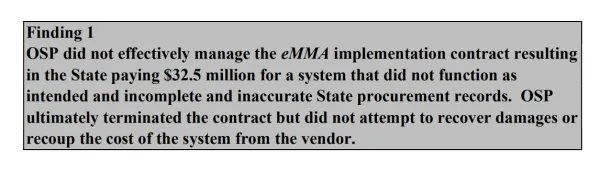
There is a desperate need for the State to shore up its oversight of its procurement and contract processes and to significantly reign in this spending, particularly as the State is looking to close funding gaps. Prioritizing our state services means reining in ballooning consulting fees and cutting the most wasteful contracts.
Without guardrails, AI (artificial intelligence) will hurt more than it will help.
A majority of survey respondents who work in office settings state that they have concerns about the use of AI in their workplace or job.
The deployment of artificial intelligence (AI) has the potential to dramatically impact and alter the nature of our society, democracy, and economy. Without sufficient guardrails, AI could exacerbate the spread of misinformation and biases, impact the delivery of vital public services, displace humans from jobs, erode labor standards, and threaten our democracy.
AFSCME recognizes that artificial intelligence to impact our jobs and public services, but in order for AI to be developed and used responsibly in our workplaces, workers must have a seat at the table. The AFL-CIO has outlined principles to protect workers from the irresponsible use of artificial intelligence and to chart a path for society where workers, not billionaires, benefit from artificial intelligence.
Here in Maryland, Governor Moore signed an executive order shortly after assuming office that emphasized the need to deploy AI responsibly in state government rooted in the following principles: i) fairness and equity; ii) innovation; iii) privacy; iv) safety, security, and resiliency; v) validity and reliability; and vi) transparency, accountability, and explainability. The administration affirmed its commitment that AI in state government should enhance public services, while not displacing state workers from their jobs and focusing on up-skilling state workers to use AI. Maryland maintains an inventory of how AI is deployed and used across state government. The inventory is a key tool for transparency that must be maintained and updated in real time to ensure accountability from state government and proper oversight of state services.
The principles and commitments made by the administration are promising; however, continued oversight, review of existing AI practices, and quality AI training for state workers is needed to ensure AI positively enhances Maryland’s state services. State leaders must work with our union to ensure that AI guardrails are continuously reviewed and evaluated.
AI policies must center the knowledge, experience, and dedication of AFSCME members to make certain Marylanders receive the quality public services they depend on. State workers on the frontlines must be placed at the center and have a voice in any deployment, use, and training on AI.
What AFSCME Members Are Saying:
“We’ve been using AI for a few years to help with deed processing. It makes many mistakes. Has caused our processing time to slow because there are always issues with the system. Also, because of the program they are not filling clerical pins when our staff leave.”
— Survey Response, Assistant Office Manager, SDAT
“While AI can be a valuable tool, I do not want to lose the ability to perform basic tasks independently or rely on technology for things I should still be able to do on my own. I believe AI should be used to support our work, not replace essential skills and critical thinking.”
— Survey Response, Family Investment Specialist, DHS
Millions of taxpayer dollars are being spent on anti-union law firms to silence worker voices.
The State of Maryland has consistently failed to create an environment where labor rights are respected, employees' wishes are honored, and contractors are held to a fundamental legal standard.
As a result, the ability for workers to engage in collective action for their protection and collective voice at work has been at best, disrespected, and at worst, completely violated. Employees have, in the worst instances, been functionally unable to exercise their basic labor rights at work. The Office of the Public Defender and the University System of Maryland (USM) are both prime examples of places that have retained anti-union law firms.
The State has failed to assert its authority or enact the requisite protections that would ensure every person working in the State of Maryland be able to access their legally enshrined rights to organize and engage in mutual protection at work.
One particularly glaring example is Centurion Health, whom the State contracts with for various medical services in state prisons. While being contracted by the State, and being paid hundreds of millions of Maryland tax dollars, Centurion Health engaged in a variety of anti-union activities designed to discourage their employees from joining AFSCME. These included:
- Hiring an anti-union consultant who was brought in to persuade employees to vote against their union. He was given full access to state-secured correctional facilities for the purpose of meeting with employees during work time, disrupting patient care, in order to persuade them to vote against their union.
- Use of mailers, texts, emails, and visits from the Chief Executive Officer of Centurion Health to spread misinformation and fear about employees' unionization campaign.
- Creating a climate of uncertainty among staff and managers to derail organizing efforts.
All of this occurred after Centurion had already verbally agreed with the State to be neutral regarding any unionization efforts by Centurion employees. Despite this rampant anti-unionization campaign, employees at Centurion Cumberland prevailed and won their union election in September 2025. Centurion Health immediately moved to file challenges with an underfunded and understaffed National Labor Relations Board, resulting in months of delays and a situation wherein employees still lack the union representation that they voted for and won.
During negotiations for the first system-wide University System of Maryland contract, the USM spent millions of dollars hiring an infamous anti-union law firm to negotiate with our union. In the spring of 2026, the USM again spent money on a different anti-union law firm to defend their unfair labor practices. This is in spite of the fact that the USM already employs a multitude of in-house attorneys who could handle these matters.
This anti-union behavior is not limited to state employees. Anne Arundel County Public Library, Howard County Library System, and Frederick County Public Library all employed union-avoidance law firms. These law firms represented the employers both during employees' organizing efforts and in subsequent contract negotiations. Some of the tactics that the library systems pursued with the help of these law firms included fighting basic anti-discrimination language in our union contracts, engaging in a protracted fight against already negotiated wage increases, and illegally retaliating against workers who were involved in organizing efforts.
Telework can help boost recruitment and retention.
As of December 2025, 65% of Maryland state job titles were eligible for telework. Among those eligible employees, 24% participated in the telework program more than half of their standard workweek, with many more likely participating on a hybrid (2-day/week) schedule.
This stands in stark contrast to the pre-COVID-19 pandemic landscape and before AFSCME successfully campaigned to reform state law in 2021. Maryland’s telework participation goal was capped at just 15%. Furthermore, AFSCME bargaining unit members were largely locked out of teleworking opportunities, as access was restricted primarily to higher pay grades. Following the passage of the 2021 legislation, AFSCME successfully bargained the State of Maryland’s negotiated telework policy in 2023. This policy guarantees eligible state employees at least two days of telework per week, with an optional third day granted at management’s discretion.
70%
Percentage of survey respondents who said a remote work schedule is important
Maryland’s Public Employee Relations Board also recently ruled in favor of AFSCME Maryland regarding an Unfair Labor Practice charge against the Department of Budget and Management for refusing to provide essential telework information on an individual level for union negotiations.
The tangible impact of this policy shift is most evident in recruitment and retention efforts. Telework acts as a powerful recruitment and retention tool — a benefit reflected in improved state vacancy rates and enhanced performance metrics, such as the reduced SNAP error rates achieved by the Department of Human Services (DHS). Since the expansion of telework, DHS has reduced their vacancy rate of 15.3% in September 2023 to 7% in January 2026. Meanwhile, the SNAP error rate has dropped from 35.56% in FY22 down to 13.64% in FY24.
Expanding telework opportunities can also create a potential savings opportunity by allowing the State to consolidate and offload expensive office space and leases.
What AFSCME Members Are Saying:
“Being a foster care worker, the ability to work remotely is very important. I am all over the road, seeing kids in different counties. However, at my agency these policies are very rigid. There is no flexibility and we are only able to do this two days per week, even if our work is done.”
— Survey Response, Foster Care Worker, DHS
“I used to work fully remote and now I am hybrid. I think it is a very good option for employees at a time when we aren't seeing the increases in our paychecks and we see benefits taken away. It is nice to have the ability to save money on gas, work clothes etc. Also to get to work with minimal interruptions at home makes my job less stressful when trying to meet deadlines.”
— Survey Response, Fiscal Accounts Technician Supervisor, DPSCS