
State of Safety
Main Recommendations
- Center state workers’ safety and health on the job as a core principle of state government.
- Staff state facilities at the level necessary for safe operation and quality delivery of public services.
- Implement and enforce Maryland’s heat stress standard to protect state workers from heat stress.
- Create an air quality plan that will protect employees from exposure to poor air quality.
- Promulgate a workplace violence prevention standard that eliminates or reduces the risk of violence against our state workers. This must be done by MOSH, and workers’ unions must be involved in the development, implementation, and administration of workplace violence prevention plans at their work sites.
- Review and identify a capital improvement plan to deal with failing infrastructure.
- Develop robust training programs to ensure state workers have the skills and knowledge they need to be safe on the job.
Jump to each section:
- State employees do some of the most dangerous work in Maryland.
- Without sufficient staffing to maintain safety protocols, workplace violence remains a major problem.
- Summers are only getting hotter. Ensuring state employees are adequately protected in the heat remains a top priority.
- Maryland’s aging state infrastructure is causing major safety issues.
- The lack of sufficient health and safety trainings can have deadly consequences.
State employees do some of the most dangerous work in Maryland.
Over a third of survey respondents said they have experienced workplace violence, and over 56% have had a health or safety concern about their working conditions. When looking at just state employees in Unit H (which includes correctional and public safety employees), the percentage of those who say they have experienced workplace violence doubles to 66%.
There have been a number of high-profile cases that show how dangerous state jobs can be:
- Two Maryland Department of Transportation employees, Robert Dempsey and Dipakkumar Patel, were killed on the job just days apart earlier this year.
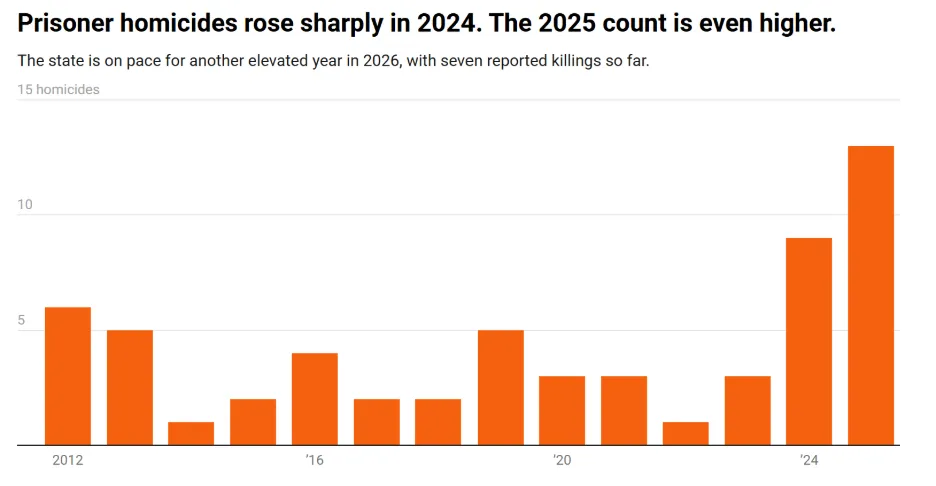
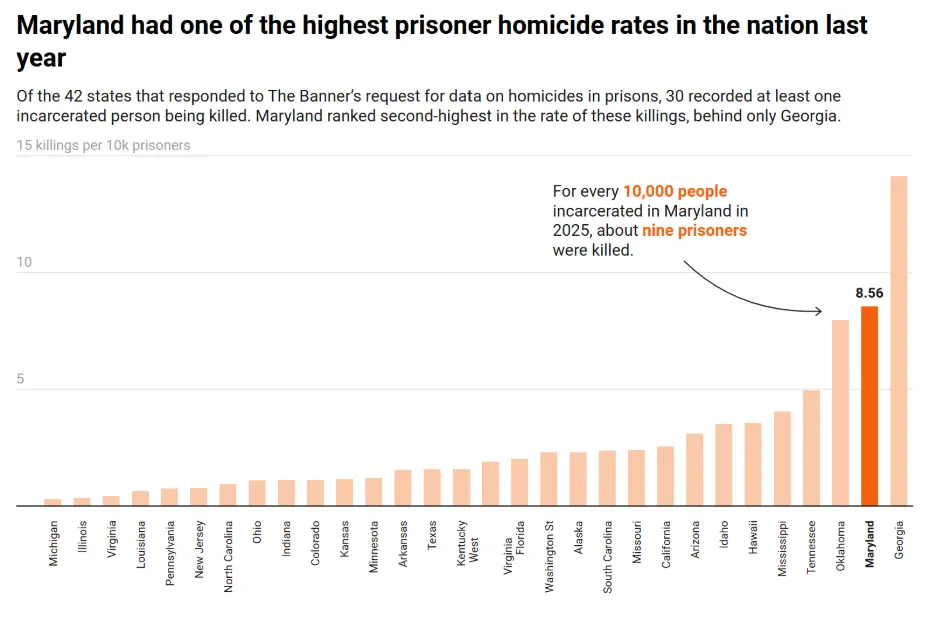
- Assaults and homicides in the Division of Corrections have reached all-time highs.
- Staff continue to be assaulted in state hospitals and in Department of Juvenile Services facilities. At Green Ridge Youth Center, almost half of the staff at one facility were reported to be out on injury leave.
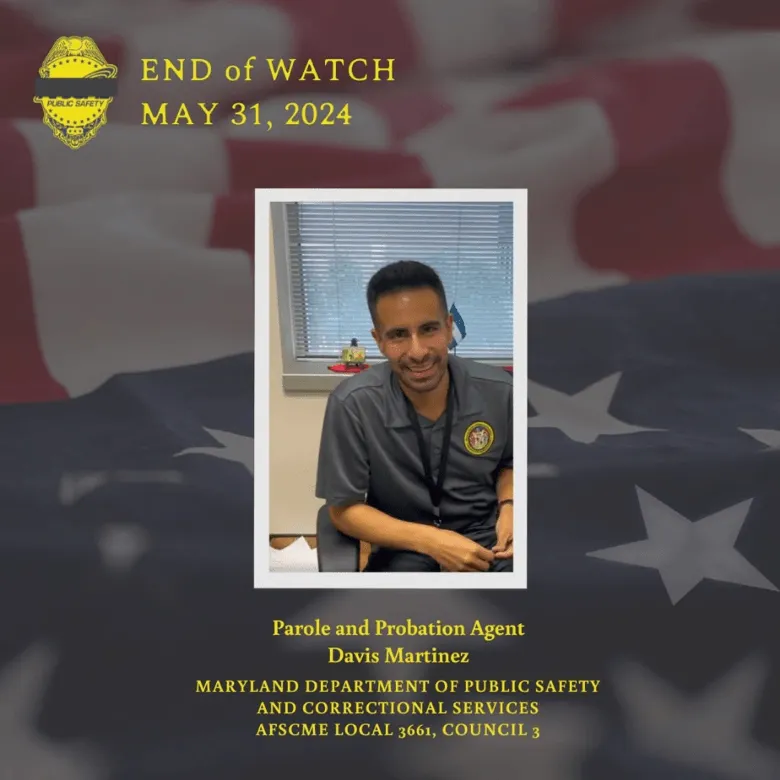
On May 31, 2024, Parole and Probation Agent Davis Martinez, 33, was killed in the line of duty. Agent Martinez was a member of AFSCME Local 3661, which represents state employees in the Department of Parole and Probation.
As a result of Agent Martinez’s tragic death, AFSCME Maryland Council 3 worked with labor allies and coalition partners to pass the Davis Martinez Public Employee Safety and Health Act. The legislation reformed Maryland’s occupational safety and health law by subjecting public employers to financial penalties for violations of the law; enhanced reporting and record keeping requirements on public employees’ safety and health; established a Public Employee Safety and Health Unit within the Maryland Occupational Safety and Health administration (MOSH); and required MOSH to promulgate a workplace violence prevention standard on or before October 1, 2026.
See also: MOSH’s Annual Report (Safety and Health in Public Bodies)
What AFSCME Members Are Saying:
“As a community juvenile case manager, I am expected to visit homes and there is never enough additional staff to fulfill the SOP of visiting homes in pairs for safety reasons.”
— Survey Response, Case Management Specialist, DJS
“As public defenders, we are expected to go into the detention center to visit with our clients. During bonds, we go into the units, which are understaffed and not closely monitored. Since I've been here, one attorney was severely assaulted by a client while in a visitation booth. Although the detention center made changes to address attorney safety, the changes also have a negative effect on our ability to meet with clients and build a rapport with them chained to a wall during visits.”
— Survey Response, Assistant Public Defender, OPD
Without sufficient staffing to maintain safety protocols, workplace violence remains a major problem.
In Maryland’s Department of Public Safety and Correctional Services (DPSCS), the staffing crisis has created dire safety concerns for staff and for incarcerated individuals. This safety crisis looks like increased assaults on staff and incarcerated individuals, reduced programming and rehabilitation opportunities for those incarcerated, and increased tensions in our state prisons.
Whereas previously Maryland’s state prisons were functional but threadbare, they are now unable to safely operate. Many housing units are routinely staffed at less than half of what would be considered a safe staffing level. A significant number of incarcerated individuals are spending 23 hours a day locked in their cells, akin to solitary confinement, causing increased agitation and unrest in our prisons.
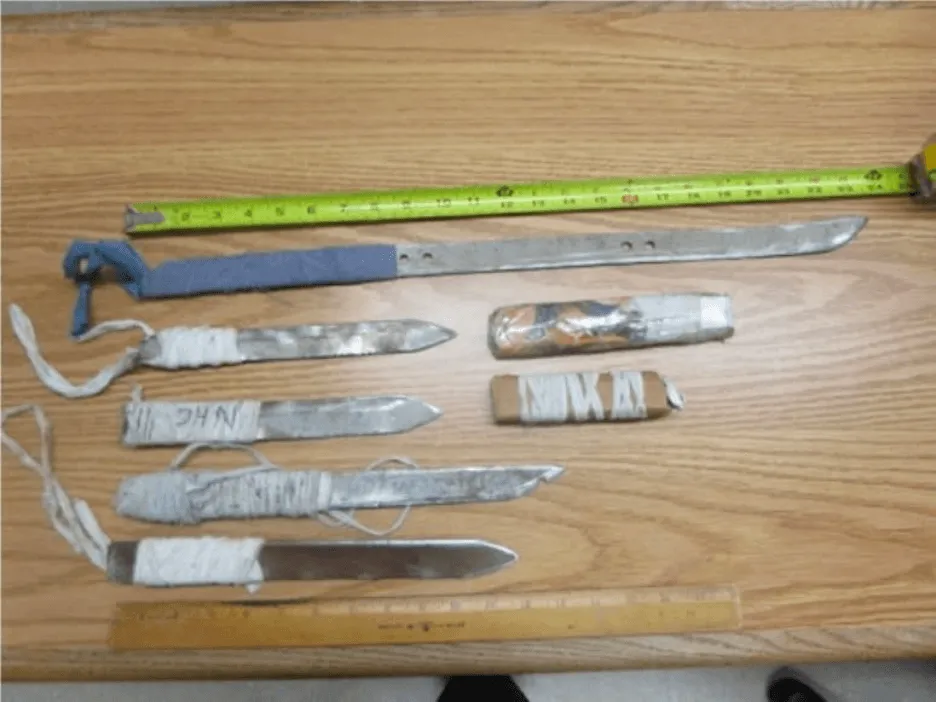
Add to this that correctional officers are regularly confiscating weapons and that the number of seizures has only gone up in recent months. We are on the precipice of even more violent incidents. Staff and incarcerated individuals are already bearing the cost, primarily with their lives.
Data provided to AFSCME Maryland from the Department of Juvenile Services also paints a bleak picture. On average, from June 2024 until now, there are about 15 youth-on-staff assaults every month — or about one assault every other day.
Short staffing places public employees at greater risk of violence in the workplace. Short staffing makes it more difficult to respond to emergencies in the workplace, delays the delivery of essential public services — causing agitation among people in the state's care, and results in mandatory overtime, which leads to burnout and fatigue of existing staff.
Developing a Workplace Violence Prevention Standard for the Public Sector in Maryland
In late June and early July of this year, MOSH conducted a series of stakeholder sessions throughout Maryland to receive input and feedback on the promulgation of the workplace violence prevention standard, as required by the Davis Martinez Public Employee Safety and Health Act. AFSCME members across Maryland stood up to share their stories of workplace violence and demand a standard that provides meaningful protections for public employees across Maryland.
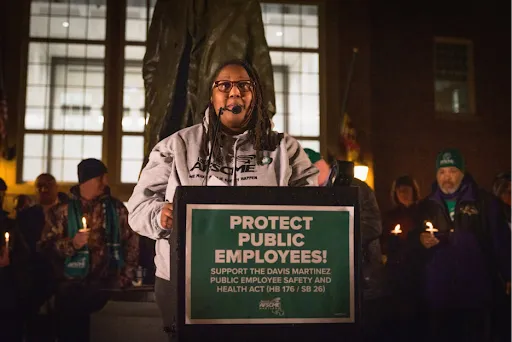
At the conclusion of the stakeholder sessions, MOSH will publicize a draft of the workplace violence prevention standard. Our union, and the public, will have the opportunity to review and comment on the draft standard before MOSH promulgates a final standard that will have the force of law on our public employers.
Generally, workplace violence prevention standards operate like many other occupational safety and health regulatory standards designed to protect workers. They begin with a risk assessment to evaluate the hazards present that could place workers at risk of violence. Using OSHA’s hierarchy of controls, employers must find ways to abate or reduce those hazards to create safer work environments for their workers. Workers must be free to report incidents of threats of violence or acts of violence, without fear of retaliation, and the employer must record these incidents
Training workers on the hazards in their workplace and methods the employer is utilizing to address those hazards is key to protecting employees. Through all of this, workers and their unions must be involved to develop, implement, and administer these plans at their worksites. Workers on the front lines know the hazards they face and are key to the development of these plans.
What AFSCME Members Are Saying:
“Due to staffing we have no one to respond if needed. We sometimes only have 2 officers in the bubble, no post relief, and maybe 1 or 2 yard officers. No air conditioning is also not good for people with health conditions.”
— Survey Response, Correctional Officer II, DPSCS
“Family members, victims, and witnesses can be hostile or threatening, and there is inadequate protection from management. We don’t have security at our office.”
— Survey Response, Assistant Public Defender, OPD
Summers are only getting hotter. Ensuring state employees are adequately protected in the heat remains a top priority.
Heat stress is a significant issue impacting the safety and health of workers. Millions of workers in our country are exposed to high heat both indoors and outdoors.
Heat illnesses and injuries vary from heat rash, cramping, exhaustion, or even strokes, which may cause death.
Research based on U.S. Bureau of Labor Statistics found that between 1992 and 2020, heat stress caused approximately 33,000 serious lost-time injuries and illnesses and the deaths of 963 workers in the U.S. However, current data likely under reports the impact heat has on workers. Recent national research has estimated that as many as 28,000 workers every year, and likely more, suffer workplace injuries as a result of the heat.
Across the state, AFSCME members on the front lines work under high heat conditions for much of the year. Tragically on August 2, 2024, AFSCME Local 44 member Ronald Silver II lost his life on the job due to heat exhaustion. Mr. Silver worked for the Baltimore City Department of Public Works in sanitation.
Shortly thereafter, on September 30, 2024, Maryland’s heat stress standard took effect.
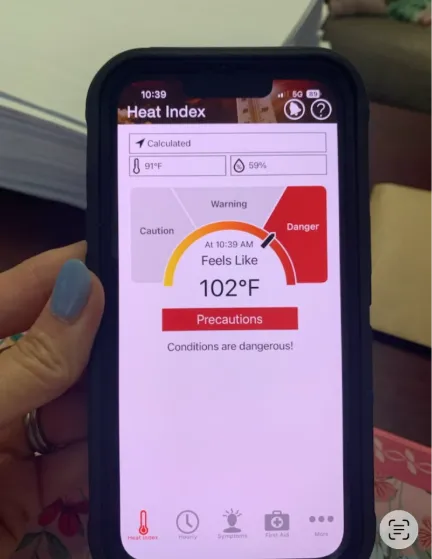
After years of advocacy by AFSCME, labor allies, and worker safety advocates, the Maryland General Assembly passed legislation requiring MOSH to adopt regulations to protect workers from heat related illness and injury caused by heat stress. Maryland’s heat stress standard (the standard) establishes common sense, but vitally important protections for workers.
The standard applies to both public and private sector employers whose employees are exposed to a heat index that equals or exceeds 80 degrees Fahrenheit in the area where the employee is working (indoor or outdoor).
Generally, the standard requires employers to keep employees safe from heat illness and injury by:
- monitoring the heat index in their work areas;
- developing, implementing, and maintaining a written heat-related illness prevention and management plan;
- properly acclimatizing workers before they are exposed to heat;
- providing employees with shaded rest breaks or alternative cooling measures if shade is not available;
- access to 32 ounces of cool drinking water per hour at no cost to the employee;
- implementation of high heat procedures, including more frequent rest breaks, when the heat index exceeds 90 and 100 degrees Fahrenheit;
- training for employees.
The state must ensure that every state worker is protected from heat and safe on the job. The state must act as a model employer by strictly adhering to Maryland’s heat stress standard and prioritizing state workers’ safety and health, particularly protecting state workers from heat during the summer months. Progress has been made, but for far too many state workers, the reality on the ground is that more must be done.
What AFSCME Members Are Saying:
“We were told to come in during a heat wave and not only was the air conditioning out of service there wasn't any ventilation because they were being replaced.”
— Survey Response, Assistant Office Manager, SDAT
“Management does not care for our safety or well-being whatsoever. Staff have brought up concerns about the vermin, mold, and temperature control issues, but we have been completely dismissed. There are multiple instances of power outages and A/C and heating system outages where staff was forced to continue working in the building at uncomfortable and dangerous temperatures. There have also been instances where the water in the building had been shut off or not working and staff were still required to work in the building.”
— Survey Response, Office Secretary, MDH
Maryland’s aging state infrastructure is causing major safety issues.
Nearly half (48%) of survey respondents have concerns about aging state infrastructure.
In just the last few years, AFSCME members have flagged a number of infrastructure issues, including:
- Legionella outbreaks in state buildings
- Mold issues
- Flooding and plumbing issues
- Pest and rodent infestations
- Poor conditions in state prisons, including jail doors that do not operate correctly and require specialized maintenance contracts, broken air conditioning, and broken and aging fences
These dilapidated facilities and hazardous conditions are unacceptable as a work environment for state employees, and they are unacceptable for the incarcerated individuals and clients who are living in state 24/7 facilities.
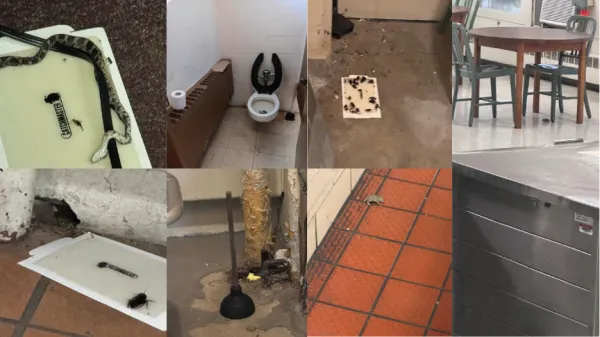
It is a failure of a duty of care to house people in rodent and bug infested facilities, in facilities without running water, and with no working AC and heating systems. The State is simply not doing enough to remedy these issues, often taking months upon months to address critical facility maintenance concerns, and leaving populations of people to languish in State care. A budget analysis of the Department of General Services shows that from January 2025 to January 2026, the overall size of the facilities renewal backlog grew by 33% to $345.2 million.
AFSCME members are at the forefront of advocating for better conditions for themselves and the people in their custody of care, and we need real State partners who will invest in the desperately needed maintenance that is required to ensure people can live and work safely in the State’s 24/7 facilities.
What AFSCME Members Are Saying:
“Yes. The building itself feels old, and things are falling apart. There are literal bugs everywhere, doors routinely stop working. There was a power disruption during my over-night shift, that caused the air locks to stop working. My coworkers were trapped behind those doors because no one could open them.”
— Survey Response, Pretrial Release Investigator, DPSCS
“Yes, I am deeply concerned. The aging infrastructure at our facility poses direct safety and operational risks. We experience constant equipment failures that disrupt daily operations, along with severe structural degradation. There are active ceiling leaks that cause tiles to collapse into the workspace, cracks in the walls, and areas where the flooring is visibly bowing or caving in. In a high-stakes intake environment, a failing physical structure is not just a maintenance issue; it is a major safety liability for the staff who work here every day.”
— Survey Response, Correctional Officer II, DPSCS
The lack of sufficient health and safety trainings can have deadly consequences.
Only 55% of state employees surveyed believe the trainings for their job adequately prepare them.
AFSCME Maryland represents over 25,000 state employees who do everything from clearing, repairing, and maintaining our state highways; to cleaning up biohazardous materials following accidents; to responding to incidents involving questions of child safety; to ensuring every single Marylander has representation when facing criminal charges. This work is vital, it is high-stakes, and it is skilled. Our members need access to consistent, high-quality trainings to ensure they are best positioned to do their work well and to do their work safely. It is what they deserve, and it is what the public we serve deserves too.
Since the pandemic, AFSCME members have reported a lack of sufficient trainings, especially for more dangerous jobs. Following the tragic loss of two highway workers Robert Dempsey and Dipakkumar Patel earlier this year, the Maryland Department of Transportation finally agreed to offer in-person trainings again. In the Maryland Department of Health, security staff continue to report that they are not receiving the trainings they need and that are required by legislation. These security trainings are outlined in the Department of Budget and Management (DBM) job specifications. The lack of sufficient trainings results in a number of operational concerns, including delays when transporting patients for medical emergencies and handling contraband and homemade weapons within hospital facilities. Combined with insufficient staffing ratios, the lack of adequate trainings can result in deadly consequences.
What AFSCME Members Are Saying:
“During the pandemic, they stopped all in-person trainings. Only recently did they start offering in-person trainings again for things like temporary traffic control management. For our jobs, in-person trainings are much better because you have someone teaching you and going over the information. If you don’t understand, you can get one-on-one help as opposed to being on a computer and having to learn on your own and figure it out.”
— Facility Maintenance Tech IV Supervisor, SHA
“I do not believe the current trainings adequately prepare me for the full scope of my job responsibilities. While some basic training is provided, it does not cover several critical areas of my work, such as proper hazmat procedures for handling jet fuel, diesel, and other hazardous substances. Additionally, there is limited training on working safely in active airfield traffic areas, navigating aging infrastructure, and managing outdoor risks such as tick exposure. As a result, I often rely on experience and on the job problem-solving rather than receiving comprehensive, formal training that fully supports the requirements and safety demands of my position.”
— Facility Maintenance Supervisor, MAA